
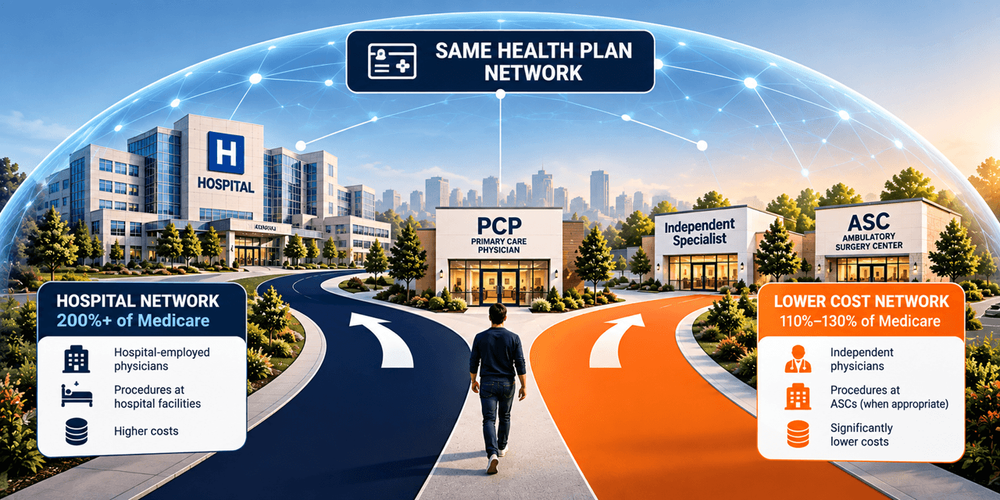
At Deerhold, we like to say there are two networks operating within any network. It doesn’t matter which network you are in. There is one at about 110%-130% of Medicare and there is one well north of 200% of Medicare. It seems to me that most people do not realize this. There are several point solutions that feed on that difference and charge plans significant fees for savings that already exist in their plans.
To benefit from the lower cost network, it’s not as simple as you might think. The transparency data availability was like a gold rush in the 1850s. It has brought a lot of people into healthcare with no experience because they had the capability to deal with the size of the data. Also, many of the new entrants are quite young. Plenty of them know data. Fewer know how a patient actually moves through the system. What Deerhold brings, from years of analyzing employer claims going back to D2Hawkeye, is an understanding of referral patterns and how the healthcare system actually works, not just what prices are for CPT codes.
MRIs are often held up as a way of paying $400 instead of $3,000 by using an independent imaging center and I’m all for doing that. It saves money. It’s just that it doesn’t move the needle on an employer’s healthcare costs. It’s just not a big enough number in totality. Maybe it moves the needle by 1%. Where there is real money is moving surgeries and other procedures like colonoscopies to ambulatory surgery centers (ASCs), but it’s not as simple as it seems.
For example, a doctor does not refer a patient to an Orthopod for an orthopedic surgery. Outside of an emergency, that rarely happens. They refer to orthopedics for evaluation of a problem. There will be X-rays for sure, maybe imaging, anti-inflammatories, and probably physical therapy for a period of time. There will be two, three or four visits with the orthopedic surgeon before surgery is discussed. Once surgery is decided upon, the patient is not going to shop for a surgery. That time has come and gone. They are going to be limited to the places their surgeon works at, or start over.
If the patient selected a hospital-employed physician upon referral by the PCP, the surgery will usually be performed at one of the hospital's locations, at hospital prices. If the patient selected an independent orthopedic physician, an ASC option will almost always be available at a much lower cost if medically appropriate. The critical time for member shopping is not when a surgery or procedure is deemed necessary, it is in the selection of the specialist once the PCP refers. That is the door into the lower cost network. At Deerhold, we will be making that journey far more obvious in PRIZM Shopping in the coming months with the belief that there are at least 10%, if not 20% or more procedural savings available by managing this process.


